The Great Reset: A Survival Guide for the Indian CS Student in the Age of AI
Is coding dead? A survival guide for Indian CS students navigating AI disruption. Learn how to evolve from a code writer to an AI orchestrator.

If you are a Computer Science student in India right now, scrolling through LinkedIn probably feels like watching a slow-motion car crash. You see headlines about layoffs, seniors struggling to switch jobs, and influencers claiming “coding is dead.” You are likely asking yourself the questions that are keeping dorm rooms awake from Bengaluru to Delhi: “What is going to happen to us?” and “Is this degree even worth it anymore?”
Take a deep breath. The panic is real, but it is often misplaced.
We are not witnessing the death of the software engineer; we are witnessing the evolution of the software engineer. The industry is undergoing a structural transformation comparable to the 1991 liberalization of the Indian economy. The “Golden Ticket” era - where a basic degree and knowing Java syntax guaranteed a job - is over. But a new era is beginning, one that values problem-solvers over code-writers.
Here is your roadmap to understanding what is happening, why the “rush” feels so chaotic, and how you can navigate it to build a future-proof career.
Part 1: The “Hollowing Out” - Why It Feels So Hard Right Now
Let’s address the elephant in the room. Why is it so hard for freshers to get hired right now?
The data confirms your anxiety. In 2024 and 2025, entry-level tech job postings in major markets dropped by nearly 67%. In India, active tech job openings fell by 24% in early 2026 compared to the previous year.
The reason isn’t just the economy; it is automation of “Codified Knowledge.”
Historically, companies hired freshers to do the “grunt work” - writing boilerplate code, fixing minor bugs, and writing unit tests. This was how you learned the trade. Today, AI models like Claude, Copilot, and Gemini can do these specific tasks faster and cheaper than a human.
Because AI can handle the “training wheels” tasks, companies are hesitant to hire juniors who need training. This has created a “broken rung” on the career ladder. The floor for entry-level competency has risen; you are no longer competing just with other students, but with AI agents that cost pennies to run.
However, this does not mean there are no jobs. It means the type of job has changed. While traditional entry-level roles decline, demand for engineers who can build with AI is skyrocketing.
Part 2: The Shift - From “Code Writer” to “Orchestrator”
To survive, you must understand the fundamental shift in what it means to be a developer.
The Old Way (Pre-2023)
- The Job: You were a “builder of artifacts.” You wrote lines of code, manually translated logic into syntax, and memorized libraries.
- The Skill: Syntax memorization and speed.
- The Goal: Write clean code that works.
The New Way (2026 & Beyond)
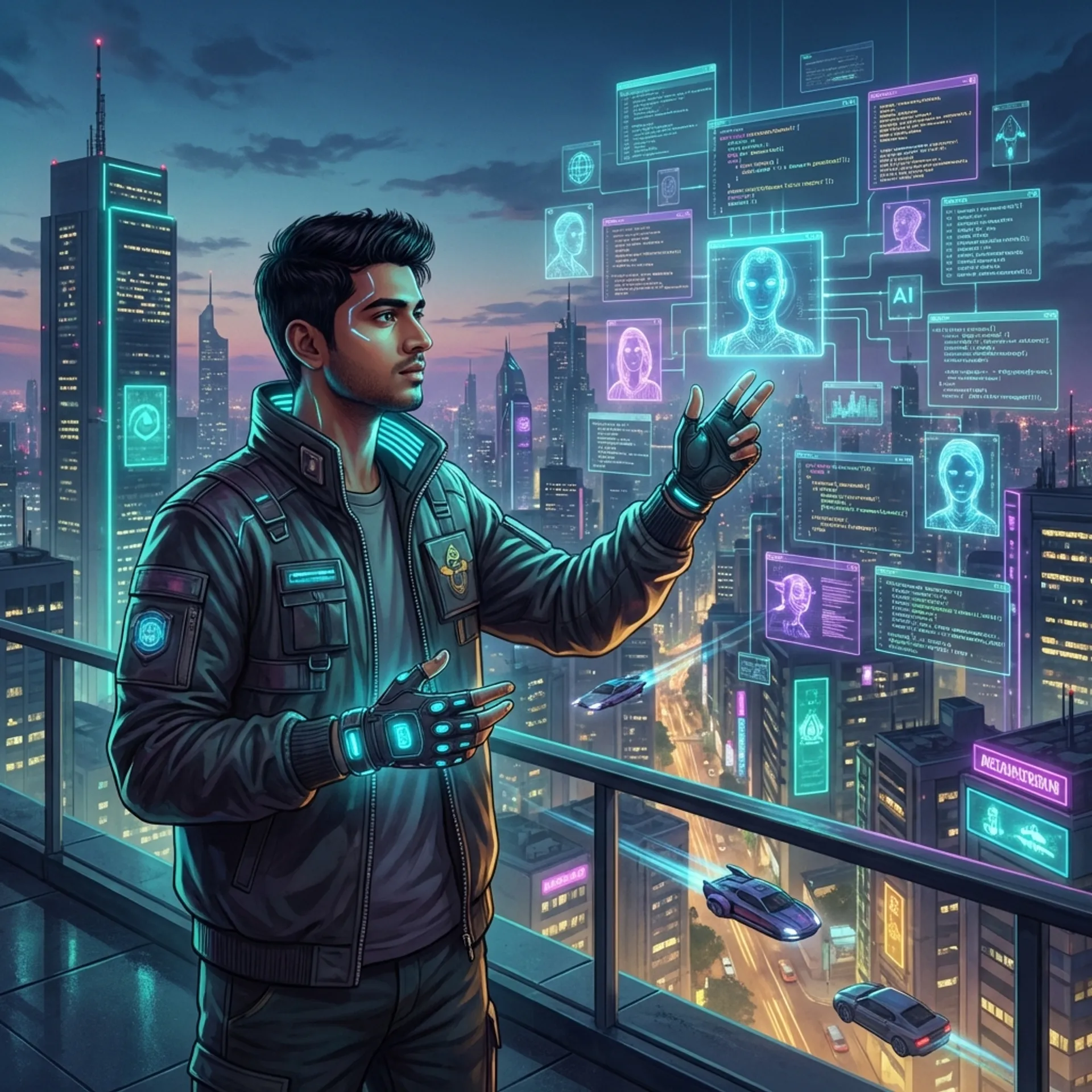
- The Job: You are an “Orchestrator of Systems.” You are not just writing code; you are supervising AI agents that write the code. Your job is to verify, debug, and stitch together complex systems.
- The Skill: “Vibe Engineering” (Context Engineering). This isn’t just “vibe coding” (letting AI do whatever it wants). It is the rigorous management of data context and prompts to ensure the system is reliable and secure.
- The Goal: Solve the business problem using the most efficient tools available.
The “Trust Gap” is Your Opportunity
Here is the secret weapon for humans: Companies do not trust AI.
Recent surveys show that while 84% of developers use AI tools, only 33% trust the accuracy of the output. AI code is often “almost right, but not quite,” leading to security flaws and technical debt. Companies need you to be the expert who can look at AI-generated code, spot the subtle logic error or security vulnerability, and fix it. You are no longer the bricklayer; you are the site inspector.
Part 3: The “Jevons Paradox” - Why Demand Will Actually Increase
There is a concept in economics called Jevons Paradox: as technology increases the efficiency with which a resource is used, the total consumption of that resource increases rather than decreases.
- Steam Engines: When engines became efficient, we didn’t use less coal; we used coal in everything.
- Software: As AI makes coding 10x faster, the cost of building software drops. This means projects that were previously too expensive or complex are now possible.
We are moving toward a world of “Infinite Demand” for software. Every small business, every department in a non-tech company, and every local government in India will want bespoke software solutions because they are now affordable. This will create a massive need for engineers who can architect these systems. The “Jevons Curve” suggests the total number of developers will swell, even as specific coding tasks are automated.
Part 4: The Indian Advantage - Where Will You Work?
You might think all the jobs are in Bengaluru or Hyderabad, but the map is changing.
1. The Rise of Global Capability Centers (GCCs)
India is the world’s back office for R&D. There are over 1,700 GCCs in India employing 1.9 million people. These are not just call centers; they are innovation hubs for companies like JP Morgan, Mercedes, and Target. They are aggressively hiring, but they demand high-level skills.
2. The Tier-2 City Boom
This is critical for students in colleges outside the metros. Hiring in Tier-2 cities like Coimbatore, Kochi, Indore, Ahmedabad, and Jaipur grew by 21% in 2025, outpacing the metros. Startups and GCCs are moving there for talent and lower costs. If you are studying in these cities, the opportunity is coming to your doorstep - if you are skilled enough to grab it.
3. The “Human Premium”
Indian engineers have always been strong in math and logic. AI cannot replicate “Humics” - genuine creativity, critical thinking, and social authenticity. The roles most resistant to automation are those requiring deep human judgment and stakeholder management.
Part 5: Your Survival Guide (The Roadmap)
How do you prepare? Do not just “grind LeetCode.” You need a new strategy.
Step 1: Don’t Skip the Basics (The “Recall” Strategy)
You cannot verify AI code if you don’t understand how it works.
- Action: Practice “active recall.” Turn off Copilot/ChatGPT when learning core Data Structures and Algorithms (DSA). You need to build the “cognitive mapping” in your brain so you can spot when the AI is hallucinating.
- Why: If you rely on AI for basics, you will suffer from “cognitive offloading” and lose the ability to think critically.
Step 2: Master “AI Orchestration”
Stop treating AI as a cheat code and start treating it as a junior employee you manage.
- Action: Learn Prompt Engineering not as a trick, but as a technical skill. Learn how to provide context to an LLM so it generates secure, architecturally sound code.
- Skill to Learn: RAG (Retrieval-Augmented Generation). Learn how to connect AI to external data sources. This is a massive skill gap right now.
Step 3: Build “Agentic” Projects
A generic “To-Do List” app won’t get you hired in 2026.
- Action: Build projects that use AI Agents. For example, build a system where one AI agent scrapes news, another summarizes it, and a third formats it for a newsletter, all coordinated by code you wrote.
- Focus: Focus on System Design. Show that you understand how databases, APIs, and AI models talk to each other.
Step 4: Develop “Forensic” Skills
- Action: Practice Code Review. Take a piece of AI-generated code, find the bugs, find the security flaws, and refactor it. This is what your actual job will look like.
- Certifications: Look for credentials in Cybersecurity and Cloud Architecture (AWS/Azure). These are areas where human oversight is legally required and highly valued.
Step 5: Soft Skills are the New Hard Skills
- Action: Work on your communication. Can you explain a technical trade-off to a non-technical manager? AI cannot “read the room” or navigate office politics.
- Focus: Adaptability. The tools you use today will be obsolete in 6 months. Your ability to unlearn and relearn is your only true job security.
Conclusion: You Are the Pilot
To answer your burning questions:
- “Will AI take our jobs?” It will take the tasks of the junior developer of 2020. But it will create new roles for the “AI-Augmented Engineer” of 2026.
- “Is it worth learning to code?” Yes, but “coding” now means “solving problems using logic and architecture,” not just typing syntax.
- “How do I survive?” By moving up the value chain. Do not settle for being a code monkey. Become an architect.
The “rush” you feel is the sound of the industry fixing itself. It is scary, but it is also flushing out mediocrity. If you are willing to learn the foundations, master the new tools, and cultivate your human judgment, you won’t just survive; you will command a premium in a market that is desperate for engineers who can actually think.
You are not being replaced. You are being promoted to the role of a pilot. Learn to fly the machine.