Why Interactive Websites Matter (More Than Ever in 2025)
Discover how interactive web experiences drive engagement, conversions, and brand recall - from a CTO who builds them daily. Learn why interaction isn't decoration, it's communication.

Sariful Islam

Ever scrolled through a website that felt alive? One where elements responded to your mouse, animations guided your attention, and the whole experience felt less like reading and more like having a conversation?
That’s not accidental. That’s intentional design. And in 2025, it’s becoming the difference between websites that convert and websites that get closed in 3 seconds.
I’ve spent the last decade building software for businesses - from billing systems to full-scale ERPs. And here’s what I’ve learned: people don’t just want information anymore. They want to feel something. They want to know that there’s intention behind what they’re looking at.
Interactive websites deliver that feeling. But not in the way most people think.
The Old Web vs. The New Web
Remember the early 2000s? Websites were digital brochures. Text, images, maybe a contact form if you were lucky. You scrolled, you read, you left. It worked because that was the standard. Everyone was doing it.
Then things started shifting. Smartphones arrived. Apps raised the bar for interactivity. Suddenly, users expected websites to respond to them - not just sit there like a billboard on the highway.
Static sites are billboards. Interactive sites are conversations.
And here’s the thing: people remember conversations. They forget billboards.
Today, the best websites don’t just display information. They react to you. Scroll down, and elements fade in at just the right moment. Hover over a button, and it subtly transforms. Click a section, and the page adapts to show you exactly what you need next.
This isn’t magic. It’s psychology meeting design.
Why Interaction Works (The Psychology Behind It)
Our brains are wired to notice change. Movement, transformation, response - these things grab attention in ways that static content simply can’t.
When a website responds to your actions, three things happen:
1. Attention locks in. Your brain registers that something is reacting to you. That triggers curiosity. You keep exploring because you want to see what happens next.
2. Memory strengthens. Interactive experiences create stronger neural pathways than passive ones. You don’t just see a brand - you interact with it. That difference matters when someone is choosing between you and a competitor three weeks later.
3. Emotional connection forms. This is the big one. When a website feels responsive, intuitive, and thoughtfully designed, users interpret that as care. They think: “Someone put effort into this. This company probably cares about details in other areas too.”
That’s not a small thing. Trust starts with perception.
I’ve seen this firsthand at Zubizi. When we rebuilt our product demos with interactive walkthroughs instead of static screenshots, engagement time jumped by 60%. People didn’t just look - they clicked, explored, and asked better questions during sales calls.
The Business Angle: Interactivity Drives Real Results
Let’s talk numbers, because feelings don’t pay the bills.
Increased Time on Site: Users spend 2-3x longer on interactive websites compared to static ones. More time means more opportunity to communicate value, build trust, and guide them toward conversion.
Higher Conversion Rates: Micro-interactions - those small animations when you hover over a button or when a form field validates in real time - reduce friction. They make actions feel easier, which means people complete them more often. We’ve seen form completion rates improve by 25-40% just by adding subtle interaction cues.
Better SEO Performance: Google’s algorithm considers engagement metrics. Lower bounce rates, longer session times, and higher page interactions all signal quality. Interactive sites naturally perform better on these metrics.
Brand Recall: This is harder to measure, but it’s real. Ask someone to name three memorable websites they visited last month. Chances are, the ones they remember had something interactive about them.
Look at companies like Apple. Their product pages use scroll-based storytelling to reveal features as you move down the page. It’s not flashy - it’s purposeful. Each scroll reveals exactly one new piece of information, keeping your focus tight and your interest high.
Or take Nothing’s website. They use smooth, interactive transitions to showcase their products. As you explore different earbuds or phones, elements transform and rearrange with fluid animations that feel intentional, not gimmicky. It’s product presentation elevated to an art form.
Even at Zubizi, we’ve built interactive dashboards where data visualization responds to user input in real time. Clients don’t just see reports - they explore them. That interaction changes how they perceive the software. It feels less like a tool and more like an extension of their thinking.
The Technical Side (Without the Jargon)
You don’t need to be a developer to understand what makes websites interactive. But it helps to know what’s possible.
Micro-interactions are the small, purposeful animations that happen when you interact with an element. A button that subtly changes color on hover. A form field that gently shakes when you enter invalid data. These aren’t decorative - they’re feedback mechanisms.
Scroll-based storytelling uses your natural scrolling behavior to trigger animations and reveal content progressively. Instead of dumping everything on screen at once, the page unfolds as you explore.
3D elements like those built with Three.js can create immersive visual experiences that reinforce brand identity. I use Three.js on this site’s homepage to create an interactive 3D scene that responds to scroll and mouse movements. But here’s the key: they work best when they serve a purpose, not just when they look cool.
GSAP animations (that’s GreenSock Animation Platform) enable smooth, performant transitions that feel natural rather than robotic.
The tools exist. The question is: are you using them with intention?
The Right Balance: Don’t Overdo It
Here’s where most people mess up.
They think interaction means fireworks. Every element bouncing. Every scroll triggering three animations. Background videos playing on loop. 3D models spinning for no reason.
That’s not interactive. That’s annoying.
Good interaction is invisible until you need it. It guides without overwhelming. It responds without distracting.
I follow three rules:
1. Performance first. If your interactive elements slow down load time or cause jank on mobile, cut them. A fast, simple site beats a slow, flashy one every time.
2. Purpose over polish. Every animation should answer the question: “What does this help the user understand or do?” If the answer is “nothing,” remove it.
3. Mobile matters more. Most traffic is mobile now. If your interaction doesn’t work on a 5-inch screen, it doesn’t work.
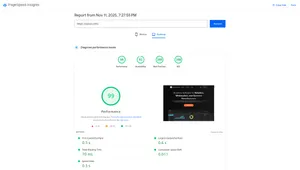
At sarifulislam.com, I built a complex 3D scene for my homepage. It looks great on desktop. But on mobile? I skip it entirely. I use a client:media directive in Astro to only load the 3D components on screens wider than 768px. Mobile users get a clean, fast experience. Desktop users get the immersive one.
That’s the balance.
Interaction Isn’t Decoration. It’s Communication.
The best websites I’ve built don’t feel like websites. They feel like experiences.
That’s because every hover, every scroll, every click is sending a message: “We thought about this. We designed this for you. We care about how you experience this.”
In 2025, users don’t just expect good design. They expect thoughtful design. They expect responsiveness - not just in layout, but in behavior.
Static websites still work. You can still get by with text and images. But “getting by” isn’t a strategy when your competitors are creating experiences people remember.
In 2025, Interactivity Isn’t Optional - It’s How Brands Stay Remembered
Here’s my challenge to you.
Go to your website right now. Scroll through it. Click around. Does it feel alive? Does it respond to you in ways that make sense? Or does it just sit there, waiting to be read?
If it’s the latter, you’re not competing in 2025. You’re competing in 2015.
The tools are here. The users are ready. The question is: are you?
Interactive websites don’t cost more because they look better. They cost more because they work better. They hold attention. They build memory. They drive action.
And in a world where every business is fighting for the same 3 seconds of attention, that’s the difference between being forgotten and being chosen.
Want to see interaction in action? Check out how we built the 3D hero section on this site using Three.js and GSAP - or reach out through the contact page if you’re thinking about making your website more engaging.